Why Your AC Runs Constantly and Never Seems to Shut Off
Quick Answer: An air conditioner runs constantly when it can't pull heat out of your home fast enough to reach the thermostat setpoint. Through a long North-Central Texas summer, some marathon cycles on the hottest afternoons are normal. Nonstop running that never lets up usually points to a dirty filter, blocked airflow, a dirty or frozen evaporator coil, low refrigerant, a failing thermostat, or a system that's the wrong size for the house. Checking the filter, vents, and doors is a smart first step. If it keeps running, a technician should inspect the coil, refrigerant charge, and airflow.
You walk out to the driveway on a July afternoon and the outdoor unit is humming like it's been at it since breakfast. Inside, the thermostat still reads two degrees above where you set it. Your AC runs constantly, the air from the vents feels cool enough, and yet the house never quite catches up. That gap, between what the system is doing and what you're actually feeling, is where most cooling headaches begin. Some of it is normal for the weather. Some of it is a sign worth chasing down.
Long Cooling Cycles Are Normal When It's This Hot
Here's the part nobody tells you. An air conditioner isn't built to blast cold and quit. It's sized to pull heat out of your home at about the same rate the heat leaks back in. On a mild day, that means short, easy cycles. During a North-Central Texas summer, when afternoons around Corsicana and Navarro County sit in the upper 90s or hotter, that balance tips hard. The warmer it gets outside, the longer your system has to run just to hold the setting.
A simple rule of thumb helps. Expect longer run times at 98 degrees than at 85. A unit that runs most of the afternoon on the worst day of the year isn't automatically broken. Plenty of systems are designed to run nearly nonstop on a peak afternoon and still keep you within a couple degrees of your target.
The trouble sign isn't a long cycle. It's a system that runs and runs while the house keeps drifting warmer, or one that never cuts off even after the sun goes down and the outside air cools. So before you assume the worst, look at the clock and the thermometer. Three in the afternoon in July? Some marathon running is expected. Midnight, and it still won't stop? Now something else is going on.
Start With the Cheap, Easy Suspects
Before anything gets technical, rule out the stuff you can check in five minutes. A surprising share of "my AC won't stop" calls trace back to something small and fixable.
The air filter
A clogged filter chokes airflow across the whole system, and restricted airflow is one of the most common reasons a unit runs long. When air can't move, the system can't shed heat, so it just keeps going. Pull the filter and hold it up to a light. If you can't see through it, swap it. In the dusty stretches of North-Central Texas, especially after a dry, windy week, filters load up faster than the once-a-month schedule most people assume.
Blocked vents and returns
Walk the house. A couch shoved against a supply vent, a rug thrown over a floor register, or a closed damper in a back bedroom all choke the air your system was built to move. Blocking vents to save on cooling usually backfires and makes the unit work harder, not less.
Open doors and windows
Check the kids' rooms first. A window cracked open or a back door that never latched will bleed conditioned air out as fast as you make it, and the AC will chase that loss all day long.
Fix any of those and give the system an hour to settle. If the run time calms down, you just saved yourself a service call.
TIP: Set a phone reminder to check your filter on the first of every month during cooling season. In a dusty climate, a clean filter is the single easiest thing you can do to keep run times down.
A Dirty or Frozen Coil Keeps the System Chasing Its Tail
Move past the filter and the next suspect is the evaporator coil, the indoor part where your system actually absorbs heat from the air. Over a few seasons it picks up a film of dust and grime. A dirty coil can't pull heat efficiently, so the system runs longer trying to hit a temperature it can't quite reach. Most modern coils sit sealed inside the air handler, which is why cleaning them is a technician's job, not a weekend one.
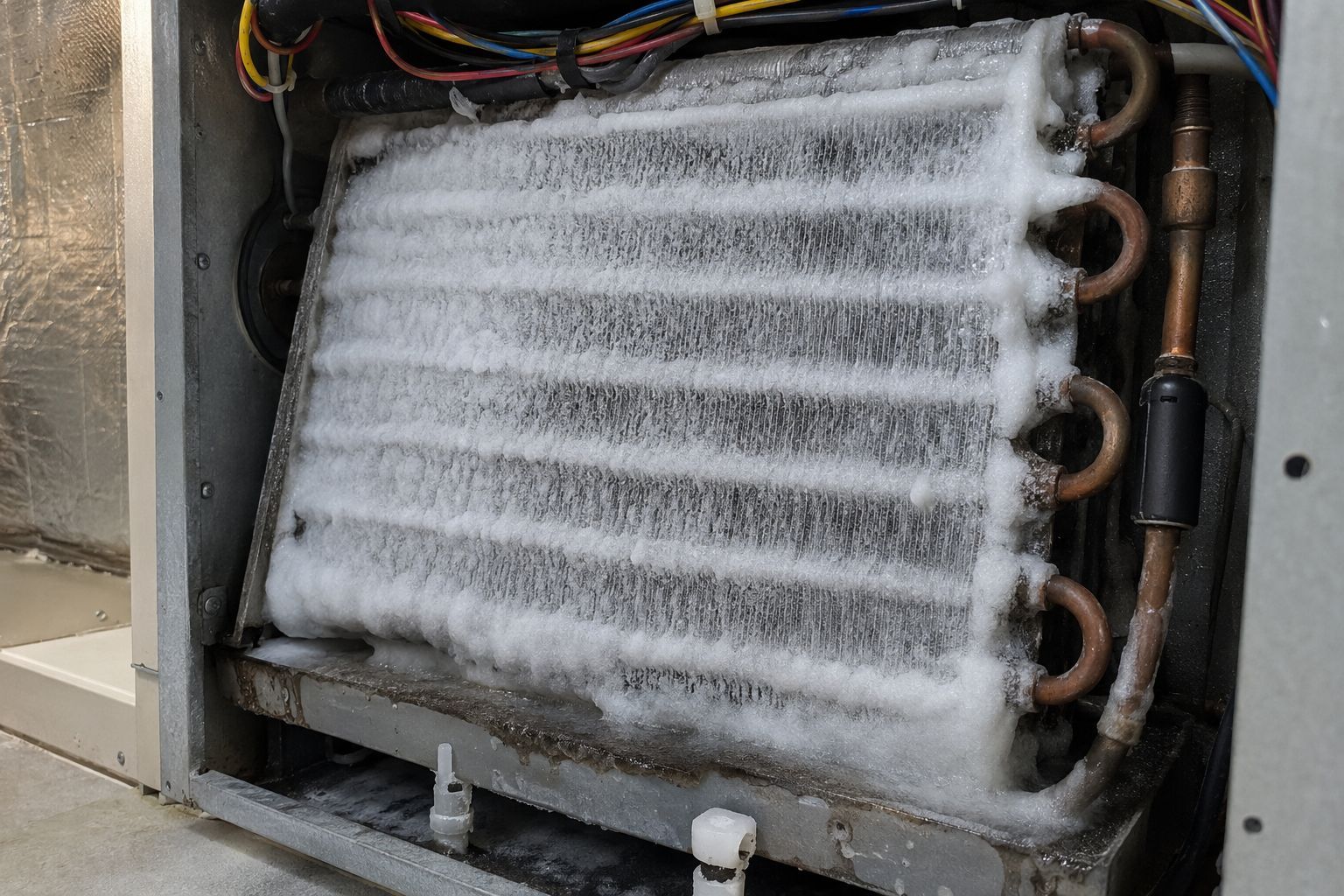
Then there's the frozen coil, which looks alarming and confuses a lot of homeowners. If airflow drops too low or refrigerant runs short, the coil gets so cold that moisture in the air freezes onto it in a block of ice. Ice on the indoor coil, or on the copper lines running out to the condenser, means the system can't cool at all even while it's running flat out. Texas humidity makes this worse, because there's more moisture in the air to freeze onto a struggling coil.
Spot ice? Switch the system to "fan only" at the thermostat and let it thaw before anyone inspects it. Running a frozen system harder won't help, and it can shove water where you really don't want it.
WARNING: A frozen coil that keeps running can send meltwater into the air handler and down onto your floor or ceiling. If you see ice on the lines or the indoor unit, shut off cooling and let it thaw out before calling for service.
A Bad Thermostat Can Fool the Whole System
Sometimes the equipment is fine and the brain is the problem. A failing or miscalibrated thermostat can misread the room and keep calling for cooling long after the house is comfortable. If your AC runs constantly and the rooms actually feel colder than the number on the wall, a faulty thermostat moves up the list.
Start with the settings. On a programmable or smart thermostat, it's easy to leave a schedule set a few degrees too low, or to get stuck in a "hold" you forgot about. Confirm the setpoint. Check that the fan is on "auto," not "on." Try the reset option if it has one. A fan left on "on" blows air nonstop even when the system isn't actively cooling, which fools plenty of people into thinking the AC never rests.
Placement matters as much as settings. A thermostat in direct sun, above a lamp, or right next to a supply vent gets a warped read of the house and drives odd run times. If yours sits somewhere that runs hot, that alone can explain a system that won't take a break.
When the System Is Simply the Wrong Size
Size is the one nobody thinks about until a technician brings it up. An air conditioner that's undersized for a home, or for the load a Texas summer dumps on it, will run and run because it genuinely can't keep up on the hottest days. It's doing its best with too little capacity.
The flip side surprises people. An oversized unit cools the air so fast that it shuts off before it can wring enough humidity out, then kicks right back on a few minutes later, cycling over and over. That short-cycling wears parts down and leaves the house feeling clammy even at the right temperature. Neither problem gets fixed with a simple repair, because the root cause is the match between the equipment and the house.
Right sizing comes from a load calculation that weighs your square footage, insulation, windows, and local climate, not a guess based on whatever the old unit was. If a system has never really kept up since the day it went in, sizing is worth a hard look.
What a Technician Actually Checks
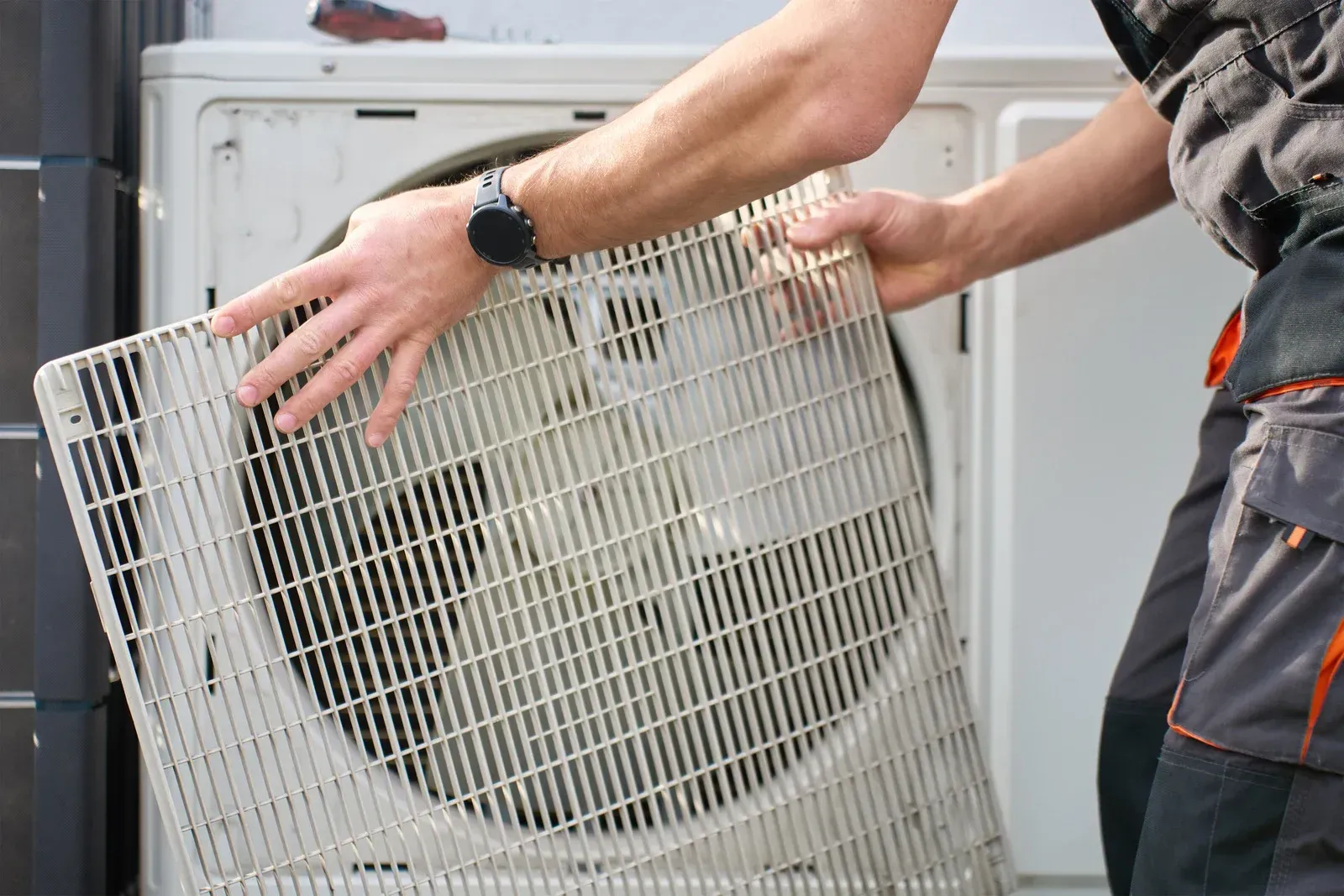
When the easy fixes don't settle things, a proper diagnosis walks the same chain in order. A tech measures airflow across the coil and blower, since airflow problems on their own can cut a system's efficiency by up to 15 percent. They inspect and clean the evaporator and condenser coils, check the refrigerant charge against the manufacturer's spec, test the thermostat and controls, and go over the ductwork for leaks and restrictions.
A thorough cooling service covers that whole chain: diagnostics, coil cleaning, an airflow and duct check, and a thermostat calibration. The point is to fix the cause, not just quiet the symptom. And a lot of this gets caught early with a seasonal tune-up before the first real heat wave, back when a small airflow issue is still a small airflow issue instead of a July afternoon with the unit running nonstop.
Frequently Asked Questions
Is it normal for my AC to run all day during a Texas heat wave?
Often, yes. When afternoon temperatures climb into the upper 90s or higher, systems run much longer to hold setpoint. Concerning signs are the house warming anyway, or the unit never shutting off overnight once it cools.
Why does my AC run constantly but the house still isn't cooling?
That combination usually means the system can't move heat effectively. Common causes are a clogged filter, dirty or frozen coil, low refrigerant, or blocked airflow. Check the filter and vents first, then have a technician inspect further.
Can a dirty air filter really make my AC run nonstop?
Yes. A clogged filter restricts air moving across the coil, and poor airflow is a leading cause of long run times. In dusty North-Central Texas, checking the filter monthly during cooling season heads off many of these calls.
Should I turn my AC off if it runs constantly and freezes up?
Switch it to "fan only" so the ice can thaw, and keep cooling off until it does. Running a frozen system harder won't cool the house and can push meltwater onto your floor or air handler.
Does an AC that runs constantly use more energy?
A system running longer than it should typically uses more energy, fighting a filter, dirty coil, low charge, or sizing mismatch. Airflow problems alone can cut efficiency up to 15 percent, so fixing the cause helps.
How do I know if my air conditioner is the wrong size?
An undersized unit runs almost constantly and can't hold setpoint. An oversized one cools in short bursts, leaving the house humid. If it's never kept up, ask for a load calculation instead of guessing.
Running Long Isn't Always a Breakdown
A long cooling cycle on a brutal afternoon is your system doing its job against a Texas summer. What matters is the pattern behind it. If the house holds close to your setting and the unit finally rests when the sun drops, you're probably fine. If it runs and runs while the rooms drift warm, or freezes up, or never quits even at night, that's the system telling you a filter, a coil, the refrigerant, the thermostat, or the sizing needs attention before the next heat wave rolls through.
Reading that pattern correctly is what turns a worried guess into a real answer. A system that short-cycles, one that never shuts off, and one that freezes up, each point to different root causes, and treating them the same way usually wastes time and money without fixing the actual problem. Based in Corsicana, Texas,
Iron Star Mechanical
has spent 1
year listening for these patterns in homes across the region, checking airflow, coil condition, refrigerant charge, and thermostat
accuracy to determine which component is struggling. Seen this way, a long run time isn't just an inconvenience on a hot afternoon; it's useful information, a signal pointing straight at what your system needs before the next stretch of triple-digit days arrives.